
A selection of our clients







One intelligence warehouse to power your dealmaking
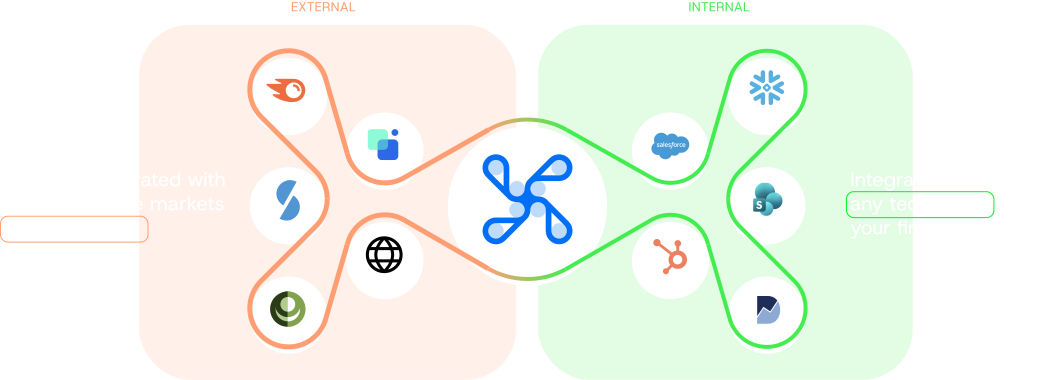
Integrate all internal and external data sources into a living, learning engine built to scan the market and identify the right deals and mandates to match your strategy, helping you get to the right deals faster than the competition.
.svg)

Helping tech leadership get data in the fast lane
A purpose-built data engine pulls together your entire market and proprietary data ecosystem, enabling Frontier LLMs to surface the best opportunities for your business. Connected and embedded within your existing tech stack and CRM, delivering deal intelligence in just 4 weeks.

Helping deal teams get the right deals across the line
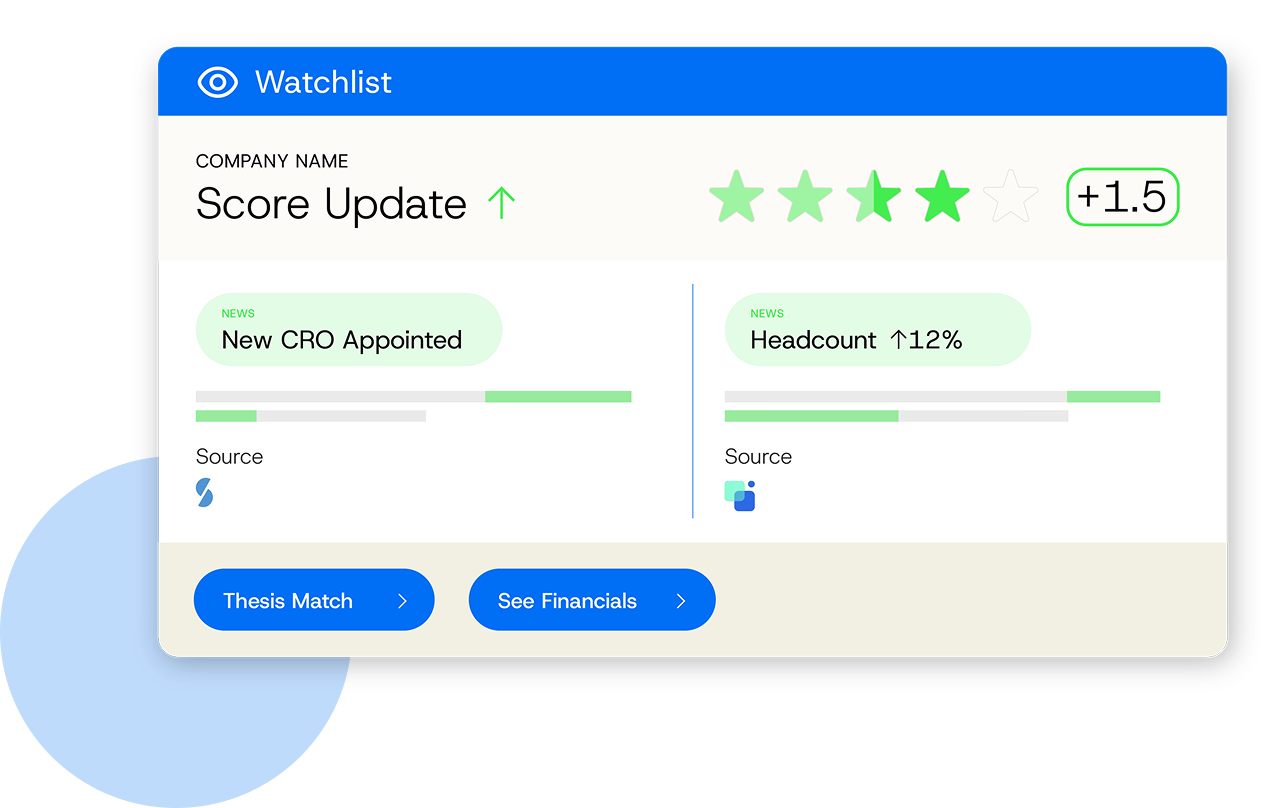
Giving deal teams AI agents trained on their investment thesis and strategy, to deliver automated specific target opportunities, market monitoring insights to reach out, and at-a-glance company reports to ensure you're prepared throughout the deal cycle.
Connecting the unconnected in dealmaking
Unifying the data, intelligence, and signals that exist for financial firms, and transforming it into deals.
Finally, a platform your firm can truly customize
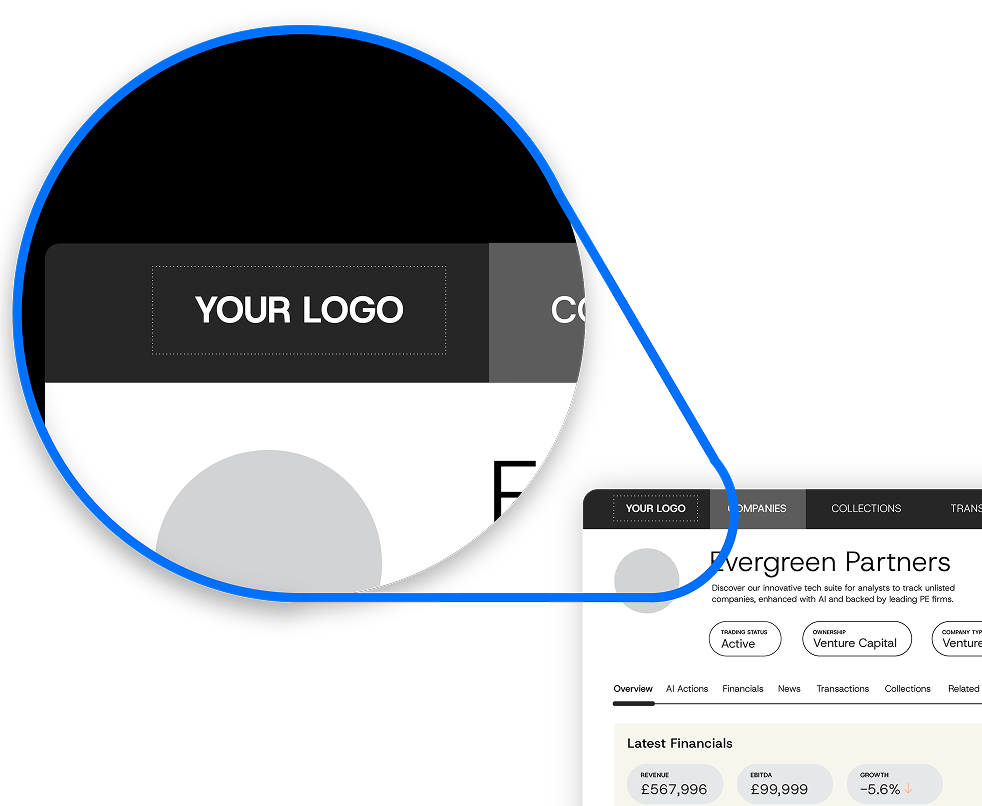
Deal Engine is offered as a white-labelled solution, resulting in faster onboarding, adoption, brand alignment and organizational buy-in.
Find more net new deals for your firm
Codify your strategy, track the market and increase relevance. Deal Engine delivers always-on agentic AI intelligence that continuously monitors your entire investable universe — specified by your thesis — and surfaces high-fit targets.
Unify data, unlock insights
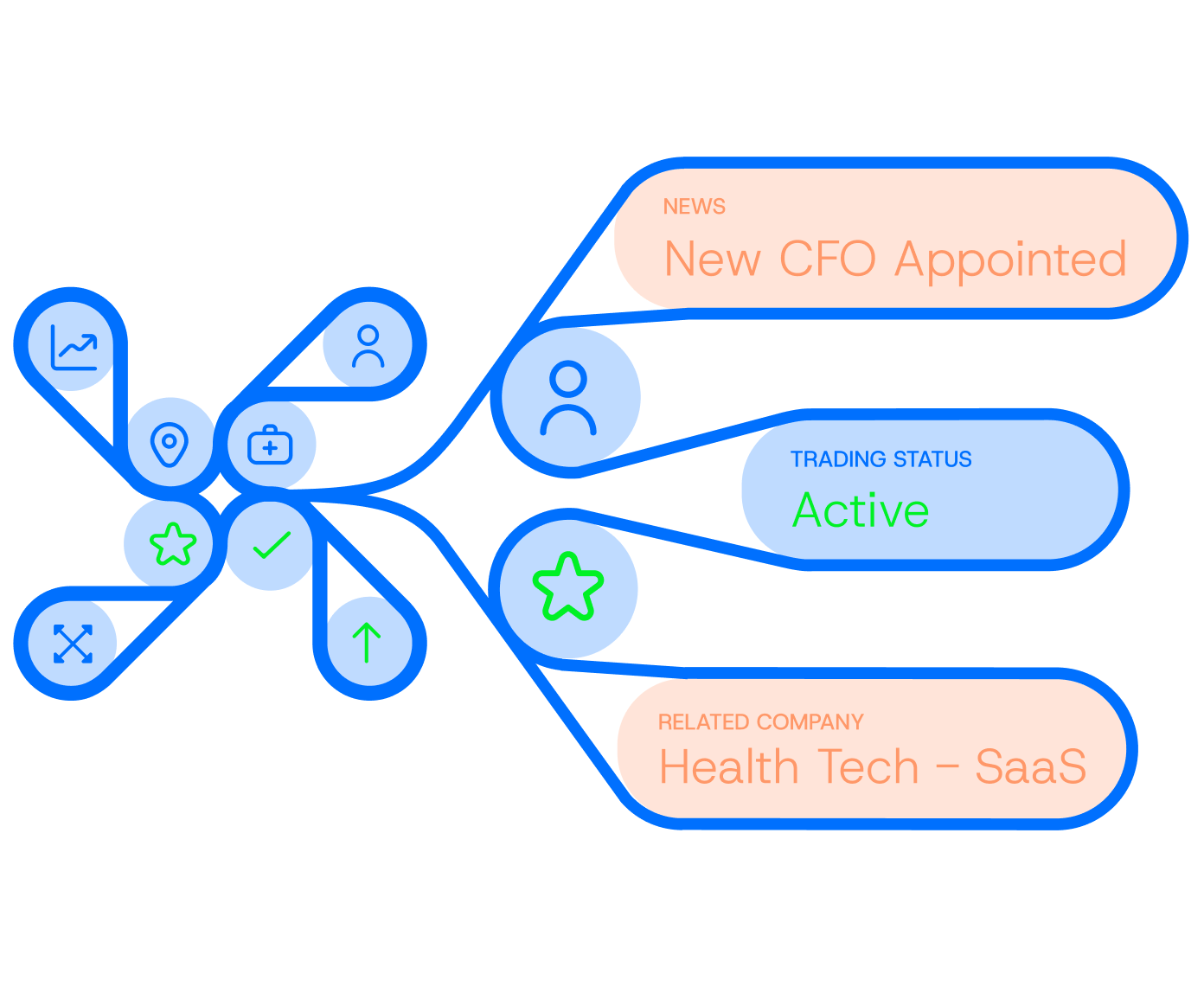
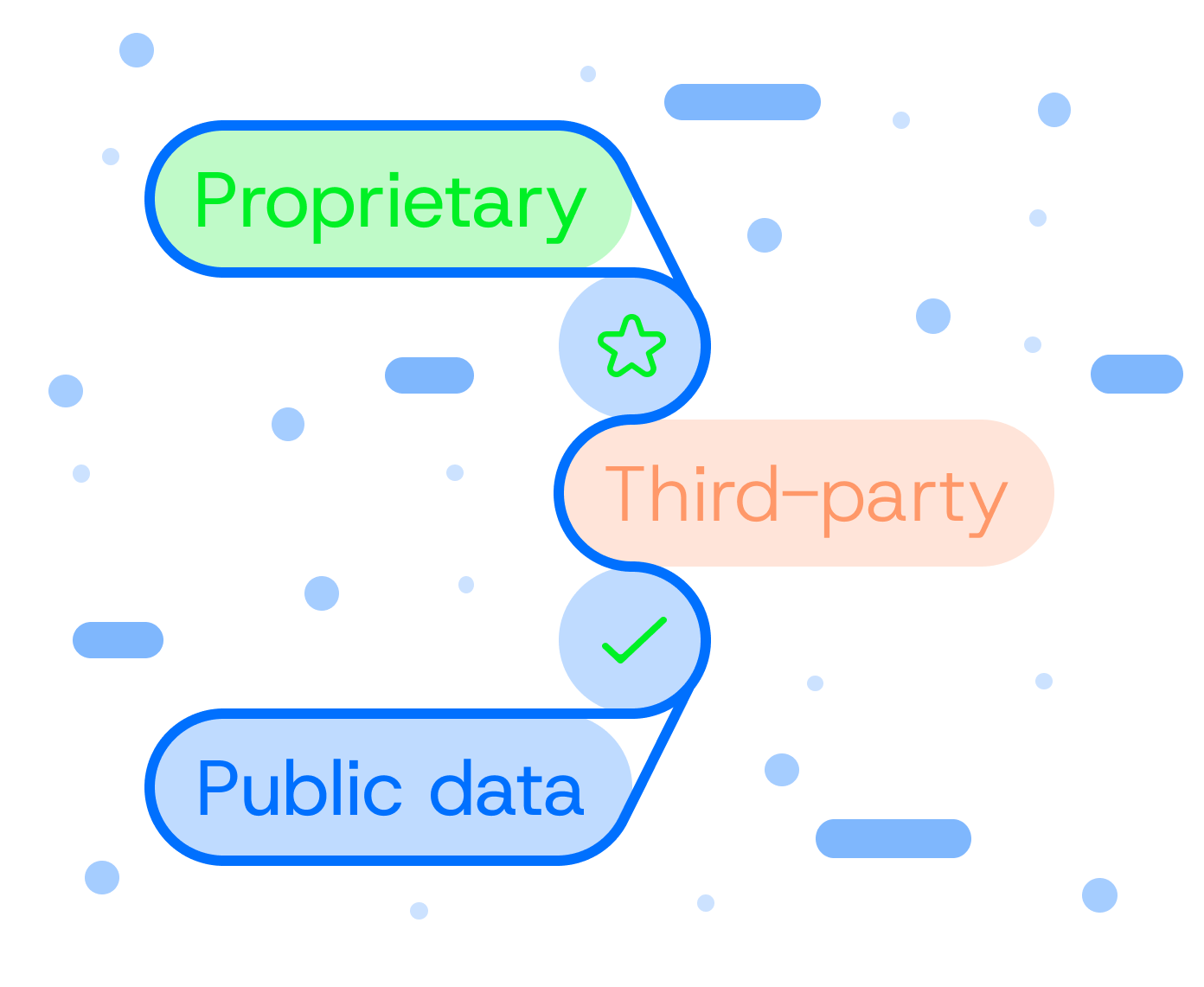
White-label the technology and make your Deal Engine entirely yours. Deal Engine brings together proprietary, third-party, and public data into a single connected layer, transforming information into actionable intelligence.
Power up instead of piling on
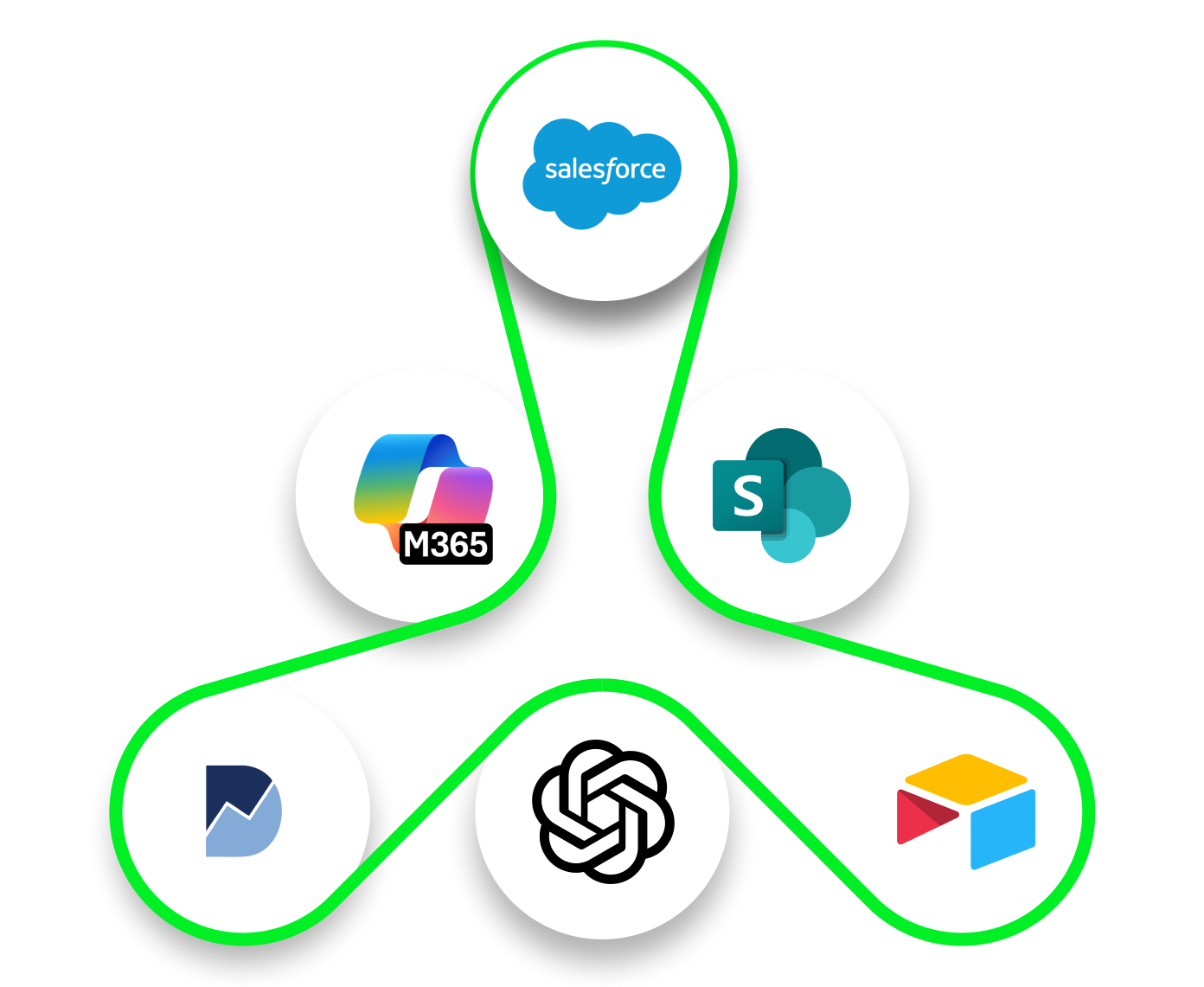
Optimize your data spend and unlock the value in your CRM and internal documents. Deal Engine enriches your CRM with structured, intelligent data without adding clutter, complimenting your existing tech stack instead of complicating it.
Build the gen AI-enabled firm of tomorrow
Fuel your AI roadmap with an integrated agentic AI intelligence layer. Accumulate and train your firm’s own proprietary dealmaking engine, built to evolve with your strategy and scale firm-wide tech-readiness.
Putting a heartbeat behind your CRM
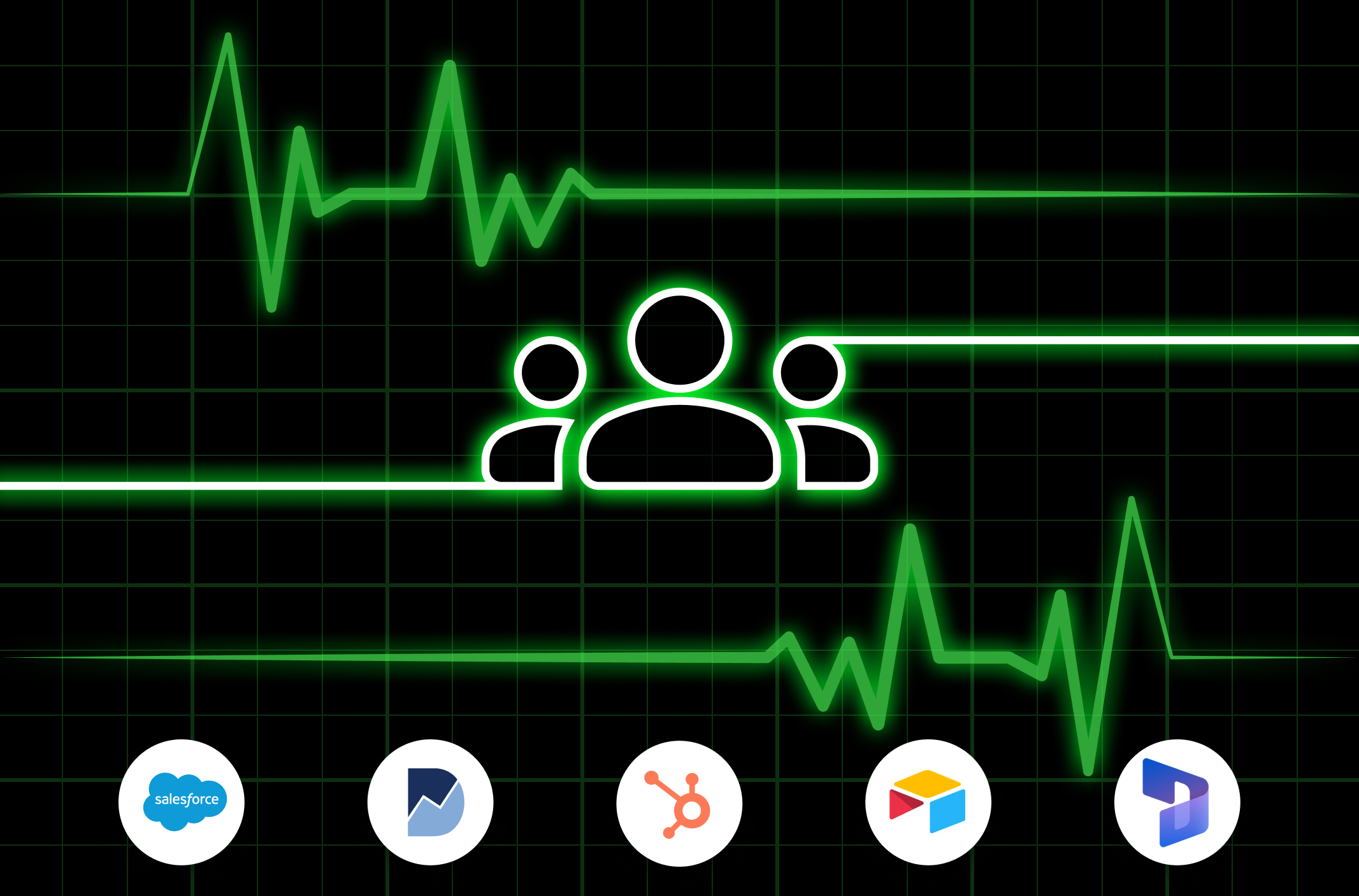
We recently wrote about why AI needs a heartbeat: the difference between a system that only responds when asked, and one that keeps watching after the prompt ends. This is what that actually looks like in practice.
Operationalizing Claude: one connection that pays for itself
Most teams today are connecting Claude, or another AI tool, directly to a handful of systems: a CRM, a document store, a market data provider, one connection at a time. This is one of the practical problems we set out in our whitepaper, How to scale AI in private markets, which covers the architecture question in full. This piece goes deeper on one part of it: what it actually takes to operationalise Claude, rather than just connect it. That approach runs into three problems fast. First, every connection has to be rebuilt for every tool. Set it up for your Claude instance, and the moment someone wants to use ChatGPT instead, the work starts again from zero. Second, the insight generated in any one conversation stays trapped on that person's machine, in that one chat. It never makes it back to the rest of the team. Third, it gets expensive quickly, because each of those direct connections is querying the firm's systems separately, and that adds up in token cost with nothing to show for it beyond a single conversation. A single layer instead of many connections The fix is not a bigger AI model. It is a layer that sits between any AI tool and the firm's intelligence warehouse: one connection that reaches everything, instead of many separate ones that each reach a part of it. Once that layer is in place, every tool call, whether from Claude, ChatGPT, or whatever comes next, goes through the same route into the firm's data. That cuts token cost significantly, because the same information is not being pulled and reprocessed by every separate connection. It also means the firm is not locked into today's model. When a better one comes along, there is nothing to rebuild. What this looks like day to day For a market-facing professional, it starts before any meeting. Instead of piecing together old notes, past conversations, and where things were left, a single prompt pulls together everything already sitting across the CRM, the document repository, and market data: the last conversation, any outstanding actions, the latest news and financials. No dashboards, no switching between systems. The same logic scales up to something like conference preparation. Rather than someone manually cross-referencing a five hundred name attendee list against a target universe, a single prompt does that matching automatically: flagging who has already been engaged, who is new, and who is worth the most time, ranked by fit. Work that used to take hours becomes one request. Behind both of these, the mechanism is the same. Anything run on a schedule, a daily market scan or a weekly CRM update, runs centrally rather than on somebody's laptop, so it is reliable and visible: the team can see exactly what is running and what it costs. And any task that does not need a premium model, simple screening or formatting, can be handled by a cheaper one, with only the harder reasoning passed to a frontier model. That means the firm is not paying premium prices for routine work. Why this matters None of this requires a bigger or better model. It requires the infrastructure that lets whichever model a firm uses reach everything it needs, in one place, without rebuilding that access every time the tooling changes. This is the architecture question we set out in full in our whitepaper, How to scale AI in private markets. Firms operationalizing Claude or other LLMs this way are seeing meaningful reductions in manual research time and in the token cost of running AI at scale, because the same information is no longer being fetched and reprocessed separately by every tool and every person who uses it. If you want to see what operationalizing an LLM looks like for your own tech stack, book a demo or get in touch with the team.
AI needs a heartbeat
Most teams using Claude and other frontier LLMs today are getting real value from them. A question gets asked, the model pulls together an answer, and something that used to take an analyst an afternoon takes a few minutes instead. The problem is what happens after that answer is delivered. Nothing. This is one of the gaps we set out in our whitepaper, How to scale AI in private markets. The whitepaper covers the full picture of what it takes to move from ad hoc prompting to a system that compounds over time. This piece goes deeper on one part of that: why AI needs to keep working after the prompt ends. Claude and other frontier LLMs are inherently reactive. They wait for a prompt, respond to it, and then the interaction ends. For a lot of work, that is fine. But dealmaking and portfolio work are not one-off questions. Tracking companies, monitoring pipelines, and spotting changes in a market all require ongoing attention, not a single well-timed query. The reactive trap In practice, this shows up as a quiet kind of drift. A company gets researched, assessed, and filed away as "not right now." Six months later, something changes: new funding, a leadership change, a shift in strategy, and it becomes exactly the opportunity the firm was looking for. But nobody thought to ask about it again, so nobody knew. The same pattern plays out with monitoring. Claude can answer a specific question about a specific company well. What it will not do on its own is notice that something has changed and flag it before anyone asks. Every interaction is a fresh start. There is no built-in mechanism for persistence, no memory of what happened last time, and no awareness of what might be worth checking on today. This is not a flaw in the model. It is simply how prompt-based tools work. The gap only becomes visible once teams try to run this way at scale. What continuous actually requires A useful way to think about it is the difference between a system that waits and a system that watches. A reactive setup depends on someone remembering to ask the right question at the right time. A continuous one surfaces relevant changes without waiting to be asked. A reactive setup treats every interaction as isolated. A continuous one builds on what came before, so outputs accumulate rather than disappear. As Martin Pomeroy, co-founder and CTO of Deal Engine, puts it: a key concept in private markets is "not yet." Many opportunities are not immediately actionable, but they become relevant over time. Supporting that requires a system that tracks companies continuously, rather than analyzing them once and moving on. That shift, from point-in-time answers to ongoing awareness, is what separates AI that helps with individual tasks from AI that actually compounds across a firm. Why this matters more as adoption grows The more a firm relies on Claude and other frontier LLMs, the more this gap costs. Without something tracking companies and pipelines in the background, the same names get rediscovered months apart, the same signals get missed until someone happens to look, and institutional memory stays locked inside individual chat histories rather than building into something the whole team can draw on. Models are exceptional at the interface layer: taking a request and producing a good answer. But a good answer at a single point in time is not the same as an ongoing view of what is happening across a portfolio or a market. That requires something running continuously behind the interface, connecting to the firm's data, and carrying context forward from one interaction to the next. Giving AI a heartbeat, in other words, means building the layer that keeps working after the prompt ends. For the full framework, including where most firms stall and what a scalable setup actually requires, read the whitepaper: How to scale AI in private markets. If you want to see what that looks like in practice, book a demo or get in touch with the team.
Six things slowing down PE research
We hear from private equity investment and deal teams all the time who are struggling with common challenges. Typical problems that trip them up and slow down getting to the right deals at the right time.