
Investment banks are rigorous by nature. They run structured processes, manage complex stakeholder dynamics and bring deep market knowledge to every mandate they take on. But there is one part of the deal process that has resisted that same rigour for decades: building the buyer list.
Most buyer lists are still assembled the same way they always have been. Relationships, historical transactions, instinct, and a trawl through databases that reflect where the market was, not where it is. For most firms, this has simply been the way things are done. The problem is that it carries a risk most advisers have never had to quantify.
If the right buyer is not on the list, they never receive the information memorandum. They do not attend management presentations. They do not submit a bid. The deal clears at a lower multiple, takes longer than it should, or fails to find the right home entirely. And because the gap is invisible, nobody questions whether the process itself was the problem.
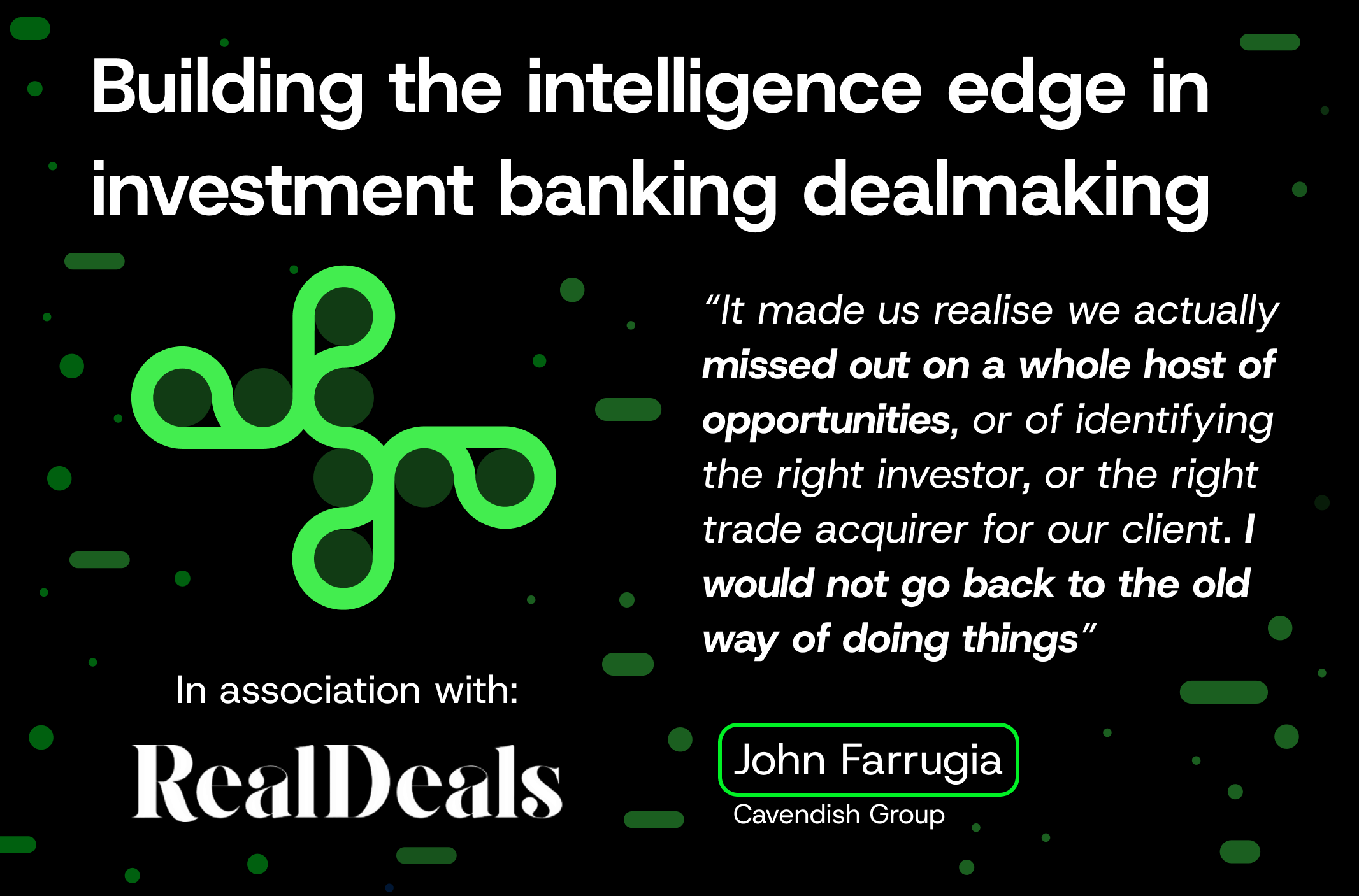
We explored this in a piece written by our CEO, Phil Westcott - published in Real Deals this week. You can read the full article here: Building the intelligence edge in investment banking dealmaking.
What Cavendish found
The piece includes a perspective from John Farrugia, CEO of Cavendish Group, who described what his firm found when they tested an agentic AI stack against a past transaction. A buyer list that an associate had spent three weeks building was reconstructed in four hours, with more than double the number of likely buyers identified. The overlap with the original list was meaningful, but so was what was missing.
As Farrugia put it: "It made us realise we actually missed out on a whole host of opportunities, or of identifying the right investor, or the right trade acquirer for our client." His conclusion was unequivocal: "I would not go back to the old way of doing things."
This is not an isolated finding. It reflects a structural problem that exists across the industry. The signals needed to build a more complete buyer universe already exist in the market. PE firms publish transaction announcements. They raise funds on disclosed timelines. They hire sector specialists who signal strategic priorities. Leadership changes at portfolio companies indicate when a platform is ready to add.
The problem is not a lack of information. It is that no one has time to aggregate it, and the tools most firms rely on were not built to do it systematically.
The intelligence gap
Most CRM systems capture what has already happened: who you have spoken to, which deals a buyer has looked at, which transactions have closed. They rarely provide a consolidated view of what buyers are actively prioritising right now. The result is that advisers can find themselves approaching firms that have moved away from a sector, while missing newer entrants who are actively looking for exactly what their client represents.
Closing that gap requires a different kind of infrastructure. Not more data subscriptions, but a living, structured view of the buyer universe that is maintained over time and connected to live market signals. One that allows an adviser to answer, before the process begins, not just which firms have done deals like this before, but which are actively deploying capital now, which have portfolio logic for the acquisition, and which have the mandate to move quickly.
Where Deal Engine fits
This is exactly the problem Deal Engine was built to address for investment banks. Our platform brings together live PE mandate intelligence, fund cycle data, sector activity and relationship history into a single, continuously updated view of the buyer market. It gives advisory teams the foundation to build more complete buyer lists, run more targeted processes, and bring greater conviction to their client conversations.
Cavendish is already using Deal Engine as part of their deal process. The shift from three weeks to four hours on buyer list construction is one data point. The more significant one is what that process revealed: buyers that would have been missed entirely under the old approach.
For investment banks looking to sharpen how they originate, how they run sell-side processes, and how they advise clients on where the right buyers actually are, that is the conversation we are having right now.
Read the full Real Deals article or find out how Deal Engine works with investment banks and M&A teams, get in touch to see the platform, live.